Driving in Turkey in 2026: What Tourists Need to Know Before Renting a Car
Driving in Turkey can turn a simple resort holiday into a real trip. The country is built for road travel: coastal highways, mountain viewpoints, historical towns and small villages are much easier to reach if you have your own car. At the same time, Turkish traffic has its own rhythm, toll roads use HGS, parking can be confusing in busy areas, and tourists are often surprised by speed cameras and local habits on the road. This guide focuses on what foreign visitors should know in 2026 before they rent a car and start driving in Turkey — without trying to sell you anything, just sharing practical experience.
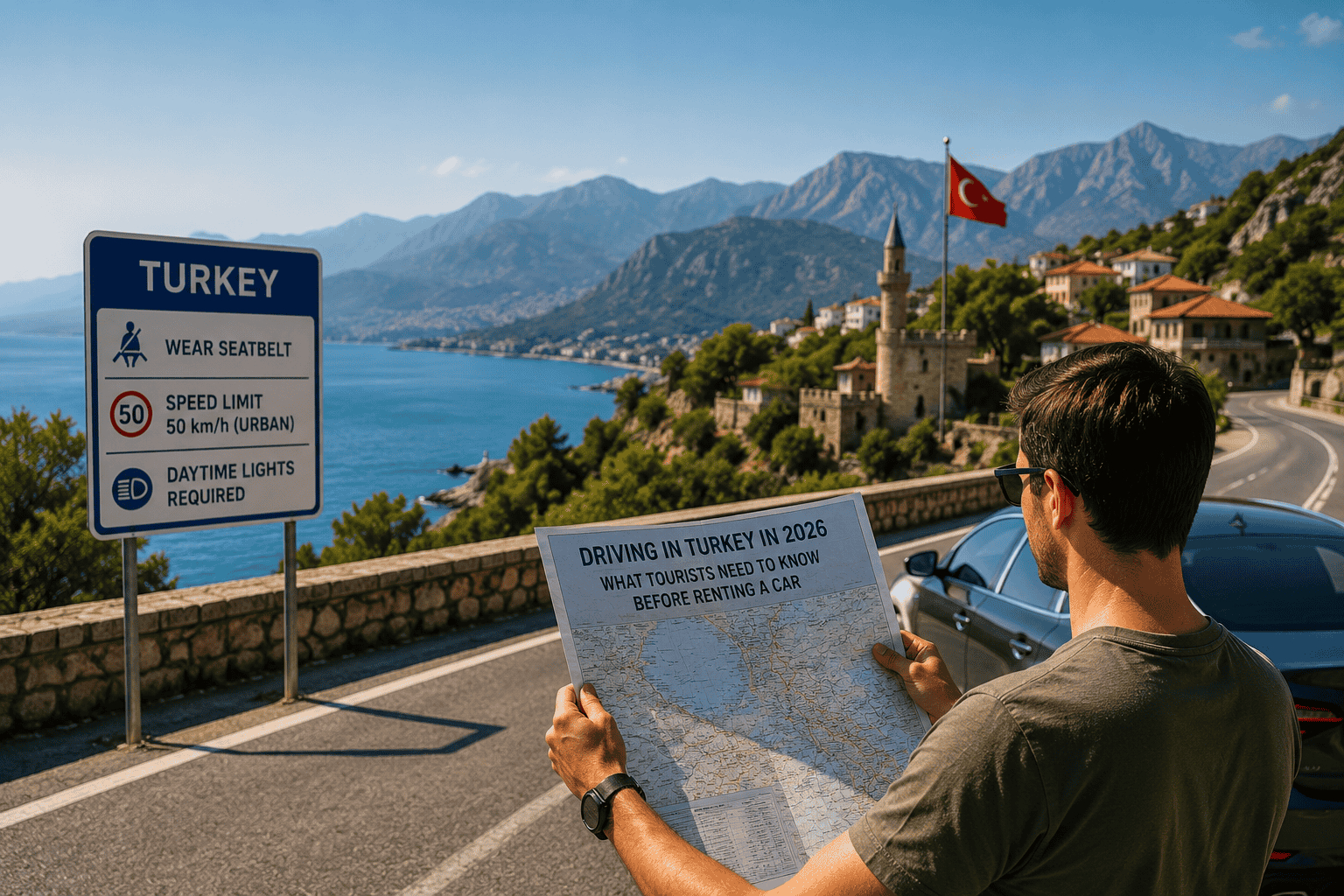
Why driving in Turkey is popular with tourists
For many visitors, the first impression of Turkey is a busy resort strip or a big city. But as soon as you leave the main hotel zones, the country becomes very road‑trip friendly. Coastal routes between Antalya and Kaş, the roads around Fethiye or the drive from Izmir to Çeşme are full of viewpoints, small beaches and villages that are difficult to reach by public transport.
Families with children often notice the difference first. With a car, you are not tied to tour buses, fixed departure times or crowded shuttles. You can carry beach gear, stop for views whenever you want, and choose less popular beaches where buses do not go. For couples and small groups, a car simply gives more flexibility: you can combine ancient sites, beach time and local restaurants in the same day without complex planning.
Basic documents and conditions for foreign drivers
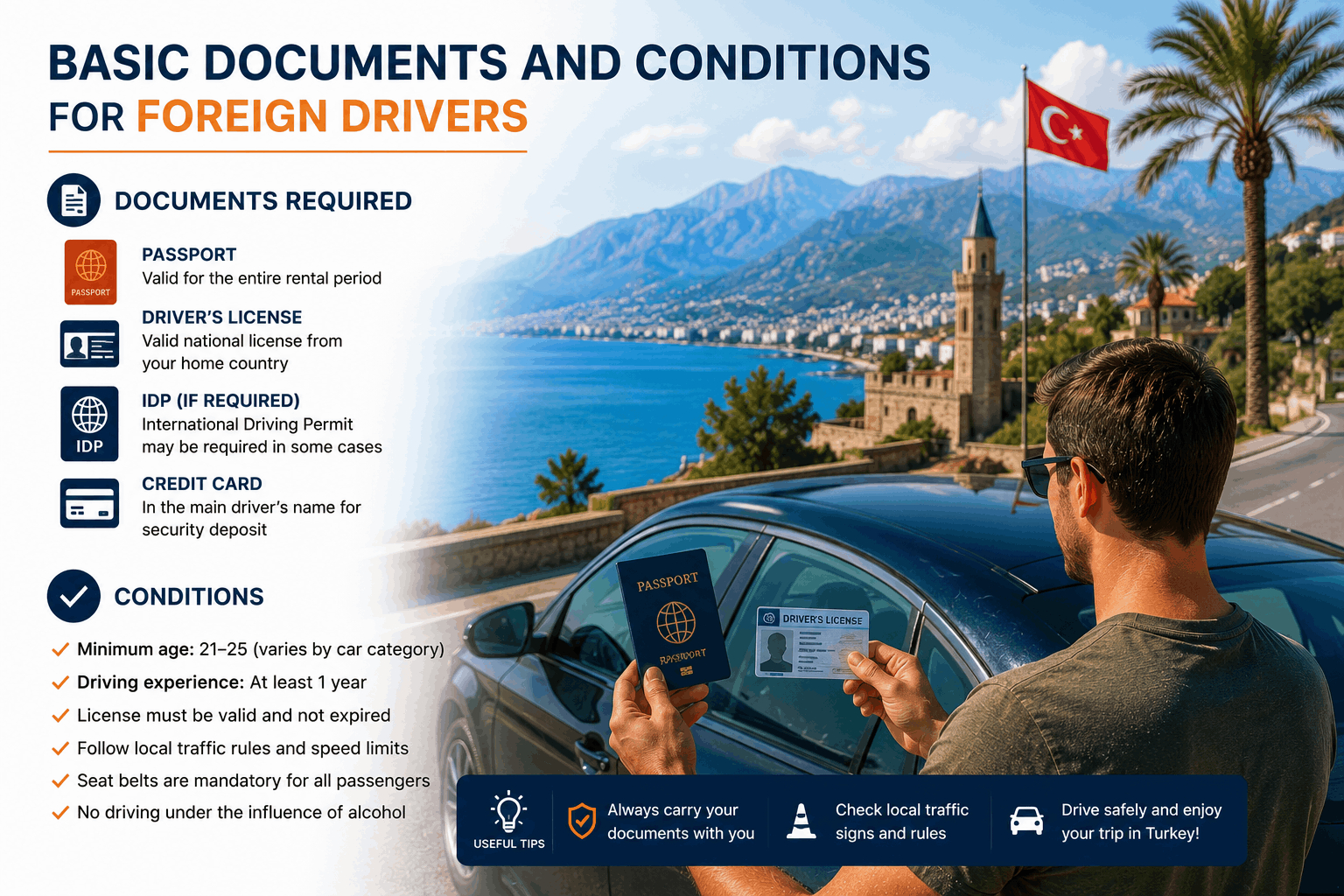
The legal side in 2026 is relatively straightforward. For most tourists, a valid national driving licence and passport are enough to drive in Turkey for up to six months after the last entry. Each new entry usually resets this period, so typical holidays of one to four weeks stay well inside the allowed window for foreign licences.
Rental companies normally ask for three things: your passport, your driving licence and a bank card for deposit or payment. Minimum age is often 21, sometimes 23–25 for more powerful cars, and at least one or two years of driving experience are required. Many tourists still worry about whether they need an international driving permit (IDP); in practice, if your licence has your name written in Latin letters and is issued according to international standards, it is usually accepted without problems, but checking the exact conditions in your booking is always a good idea.
What Turkish roads are really like
Officially, Turkey drives on the right‑hand side of the road and uses a familiar set of international road signs. In reality, the driving style can feel more dynamic than in many European countries. On multi‑lane roads, faster drivers may appear suddenly from behind, and lane discipline is not always perfect. Roundabouts are common, but not everyone signals as clearly as visitors might expect.
Speed limits are similar to many European standards: around 50 km/h in cities and towns, higher on main roads and up to 120–130 km/h on some motorways, with certain modern highways allowing up to 140 km/h after recent changes. The important detail is that speed cameras and mobile checks are widely used. Many tourists report that the limits feel generous on open roads, but fines for speeding can be significant, especially on toll highways and near large cities.
Mountain and coastal roads deserve special attention. Some stretches between coastal towns include sharp bends, steep climbs and tunnels. The views are impressive, but it is better to drive these sections in daylight, take regular breaks and avoid aggressive overtaking. In tourist cities such as Antalya, Bodrum or parts of Istanbul, traffic can be dense at rush hours, so planning extra time for city driving is wise.
Police checks, speed cameras and fines
Foreign drivers often meet two types of enforcement in Turkey: visible police checkpoints and invisible speed cameras. Checkpoints can be placed at city exits, near toll roads or on routes between popular regions. Most tourists are simply waved through after a quick licence and registration check, but you should always carry your documents and remain calm and polite.
Speed cameras are the more common source of surprises. Some are signposted, others are part of average‑speed control sections on major highways. If you exceed the limit, the fine may not appear immediately; instead, it can be processed and later passed on to your rental company, which then charges your payment method together with an administration fee. The same can happen with parking fines or unpaid tolls. Because of this, many rental companies keep a small deposit or card hold even when the main collision damage excess is covered by insurance.
HGS and toll roads: what tourists should know
Toll roads are a modern part of Turkey’s road network and can save a lot of time on long distances. The key system here is HGS — a fast, electronic toll collection method that uses stickers or tags and an online account. Official information from the General Directorate of Highways explains that vehicles with foreign licence plates must register for HGS before using tollways and must have enough credit in their account to cover passes.
In practice, many rental cars are already equipped for HGS and linked to an account. For tourists, the main risk is not forgetting to pay, but not understanding how payment happens. Some companies add the tolls to your bill after the trip, others ask for an upfront amount for HGS credit, and a few may expect you to monitor and top up the account yourself. The safest move at pickup is to ask two clear questions: “Is this car registered for HGS?” and “How will tolls be charged to me?”. That short conversation can easily prevent unexpected charges weeks after your holiday.
Parking in cities and coastal areas
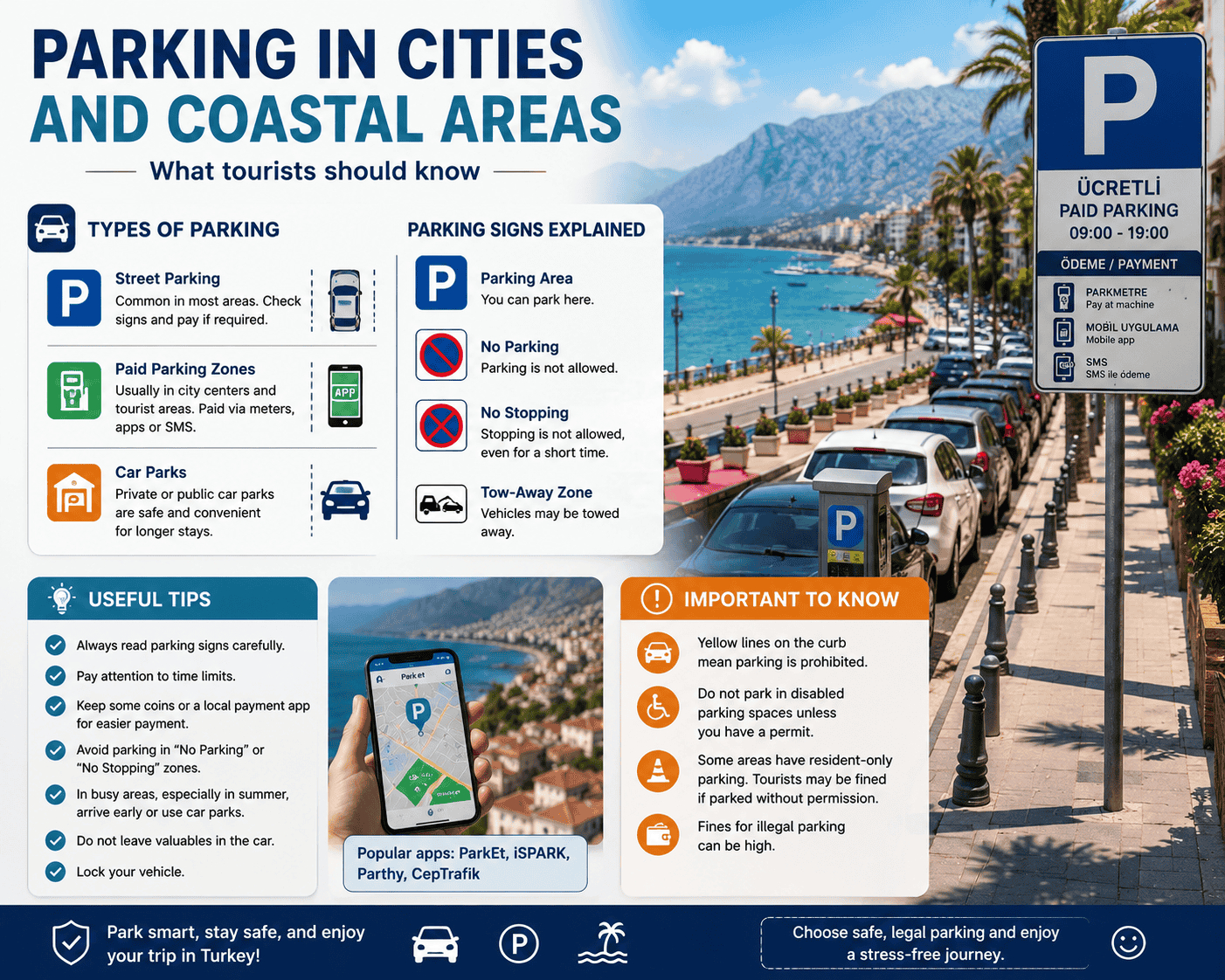
Parking conditions change a lot from place to place. In smaller towns and many villages, you can still find free street parking near cafés, beaches or guesthouses. In busy city centres and resort hotspots, however, parking can be one of the most stressful parts of driving. Space near waterfront promenades, marinas and historic centres is limited, and some hotels do not have enough private parking for all guests.
Paid parking zones are usually marked, and in some areas parking is managed by attendants or local companies. Foreign drivers often face two main problems: misunderstanding whether a spot is free or paid, and not knowing how to pay correctly (meter, attendant, app or machine). Incorrect parking can lead to fines, and in a few cases cars can be towed. Here again, fines may be forwarded to the rental company later. To reduce stress, it is worth asking your hotel in advance about parking options and using secure car parks in dense urban areas, even if they cost a little extra.
Night driving and long distances
Many visitors arrive on evening flights and consider picking up a car and driving straight to their resort at night. Modern highways around big airports are usually well lit and in good condition, but long night drives after a flight are still demanding. Fatigue, unfamiliar signs, a new car and different traffic behaviour can combine into a risky mix, especially on unfamiliar mountain or coastal roads.
If possible, it is safer to keep first night drives short, use major routes and avoid narrow, curvy roads in the dark. For longer trips, such as driving from Antalya to Kaş or from Bodrum to smaller bays, daylight hours are simply more comfortable. You see more of the landscape, have more time to react to unexpected situations and can stop at viewpoints and cafés along the way. For many tourists, planning one or two “transfer days” with reasonable distances works better than trying to cross half the country in one long push.
When renting a car in Turkey makes sense
Renting a car is not a universal solution for every trip, but there are clear situations where it adds real value. If you want to explore a region in depth — the Antalya coast, the Aegean around Bodrum and Fethiye, or the inland landscapes of Cappadocia — having a car makes it far easier to reach viewpoints, quieter beaches, canyons and small villages that are difficult to access with public transport.
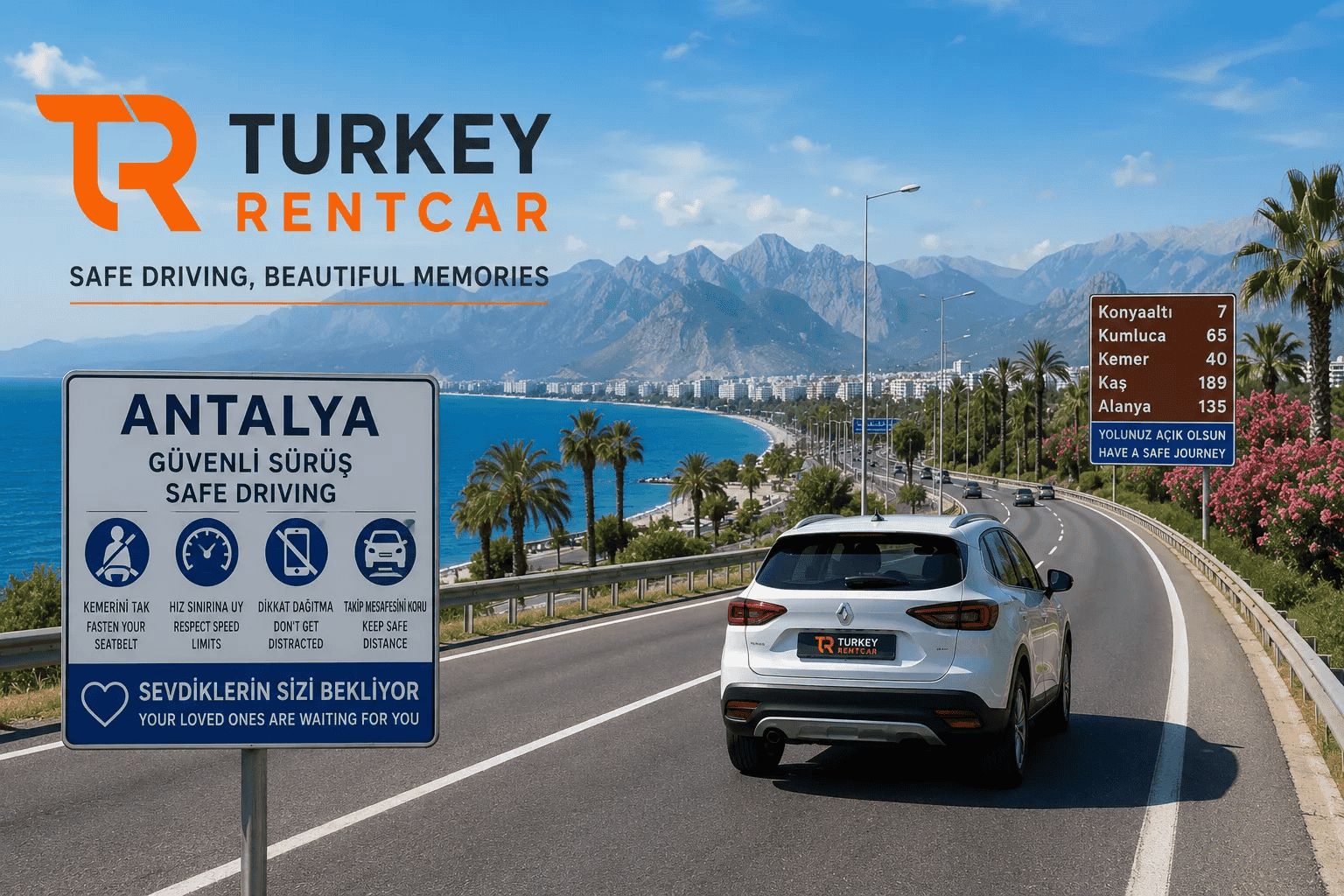
For families, a rental car often pays off in saved time and fewer logistical headaches. You can travel with child seats, luggage and snacks without struggling with crowded buses or fixed hotel transfer times. Couples and small groups who like flexible plans can combine well‑known highlights with spontaneous stops, instead of joining organised excursions every day. In these scenarios, the car is not just a means of transport but a way to turn a standard resort stay into a more personal road trip.
When you might not need a car
At the same time, there are trips where renting a car is not essential. If you plan to stay in one city or resort, use organised tours and rarely leave the immediate area, local taxis, minibuses (dolmuş) and hotel transfers can cover most needs. In very dense urban zones with heavy traffic and limited parking, such as central Istanbul, some visitors prefer to rely on public transport and occasional taxi rides rather than manage a car full‑time.
Another case is ultra‑short trips: a long weekend focused on one city, a business visit with fixed meetings, or a stay in an all‑inclusive resort where the main plan is to rest on site. For these itineraries, the effort of pickup, parking and refuelling may not justify itself. The important point is not to rent a car “because everyone does it”, but to match the decision with your real route and expectations.
A practical note about choosing a rental
Once you understand how driving in Turkey works — from HGS toll roads and speed limits to parking, police and night driving — the rental itself becomes just one element of the trip. The market is crowded: international brands, local companies and various platforms compete for attention, each with its own mix of deposits, insurance options and rules for foreign cards.
If you want to compare different offers, look beyond “from X € per day” and pay attention to what is included, how deposits and tolls are handled and how clearly conditions are explained in a language you understand. For travellers who prefer a more local and focused view of car rental options in Turkey, services like Turkey‑Rentcar can be one of the practical starting points to explore what is available for their dates and route. The choice is always yours; the key is to make it with a clear picture of how it really feels to drive a rented car in Turkey in 2026 — and detailed user‑focused guides and local platforms can help you see that picture before you even pick up the keys.